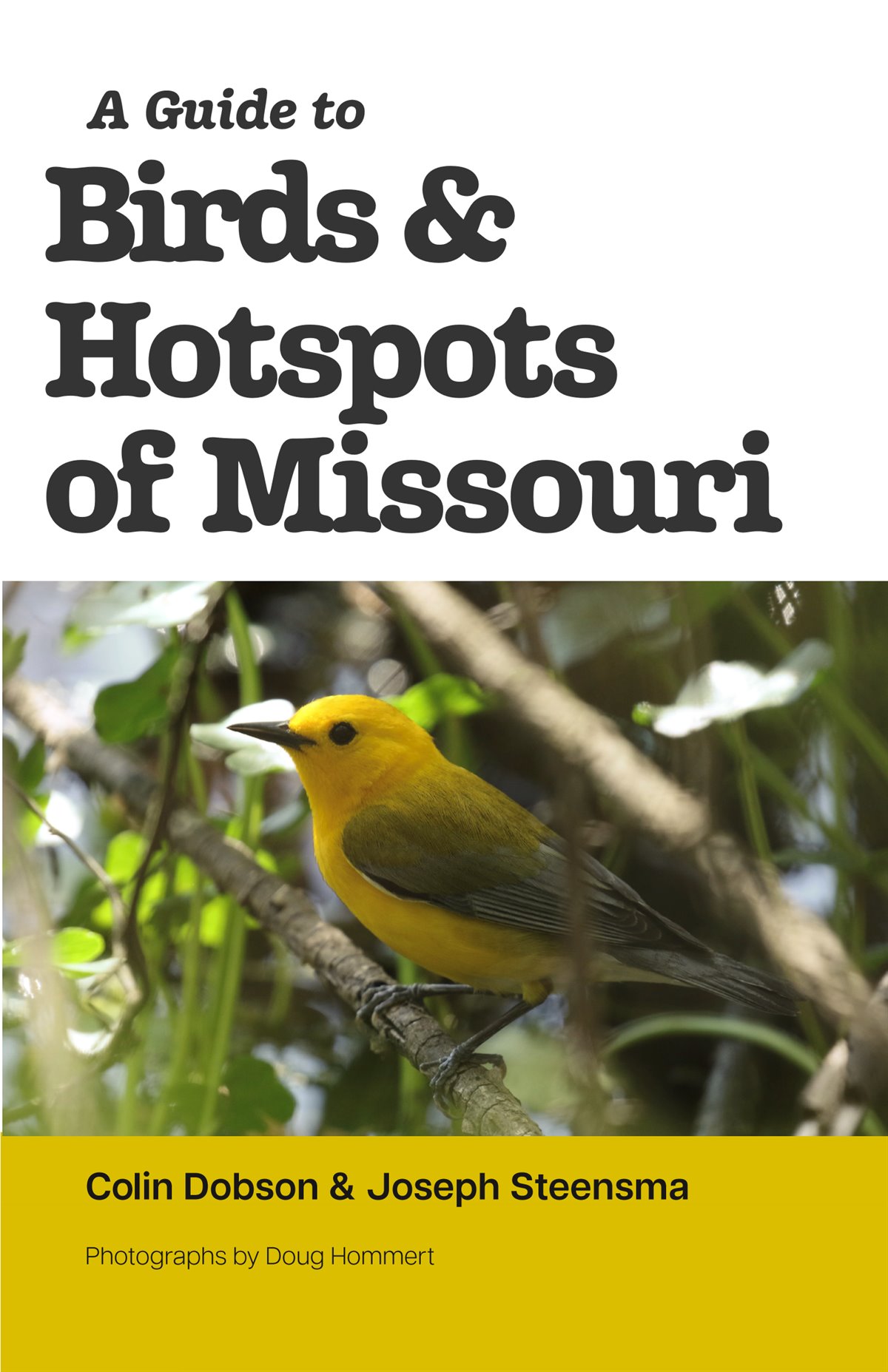
Birding in Missouri

Missouri lies where the eastern forests meet the Great Plains, and where the Missouri River joins the Mississippi. Few states pack more kinds of habitat, or more kinds of birds, into a single day's drive.

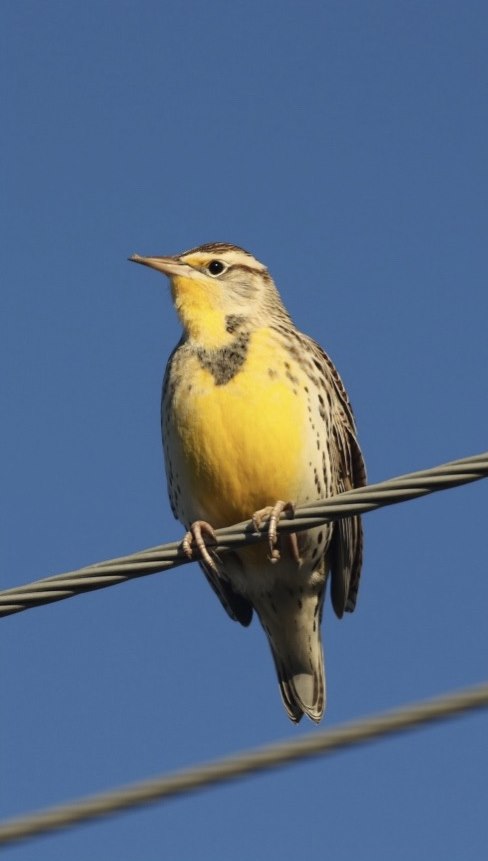
A Western Meadowlark with a bright yellow breast and black V, perched on a wire against a deep blue sky.
Western Meadowlark, from the book's introduction · Photograph by Colin Dobson

Habitat first

Birds follow habitat, so this guide is organized the same way. Here are the ecosystems that give Missouri its range of birds, along with a few of the places and species the book uses to explain them.

Tallgrass prairie

Only remnants of the state's original prairie remain, and they hold birds found almost nowhere else in Missouri. At Dunn Ranch, near the Iowa border, Greater Prairie-Chickens gather on their leks to display at dawn.

Look for: Greater Prairie-Chicken, Upland Sandpiper, Grasshopper Sparrow, Bobolink, Dickcissel

Places: Dunn Ranch, Hi Lonesome Prairie CA

Ozark and oak forests

The southern half of the state holds unbroken forest along clear, rocky creeks. In summer, this is where the state's most sought-after breeding warblers nest, many of them high in the canopy.

Look for: Cerulean, Hooded, and Kentucky Warblers, Louisiana Waterthrush, Acadian Flycatcher, Summer Tanager

Places: Mark Twain National Forest, Sugar Camp Scenic Byway, Rock Bridge State Park

Marshes and wetlands

Managed wetlands draw ducks, rails, and shorebirds by the thousands. Dense marsh vegetation means patience pays off, and October is the month for uncommon rails, wrens, and sparrows.

Look for: King Rail, Snowy Egret, LeConte's and Nelson's Sparrows, Short-eared Owl

Places: BK Leach CA, Loess Bluffs NWR, Swan Lake NWR, Eagle Bluffs CA

The big rivers

Riverlands Migratory Bird Sanctuary sits at the confluence of the Mississippi and Missouri Rivers. It is widely considered one of the top birding areas in the Midwest. Below the dams, open water draws gulls, scoters, and eagles all winter.

Look for: all three swans, American White Pelican, Bald Eagle, Least Tern, gulls

Places: Riverlands MBS, Winfield Dam

Lakes and reservoirs

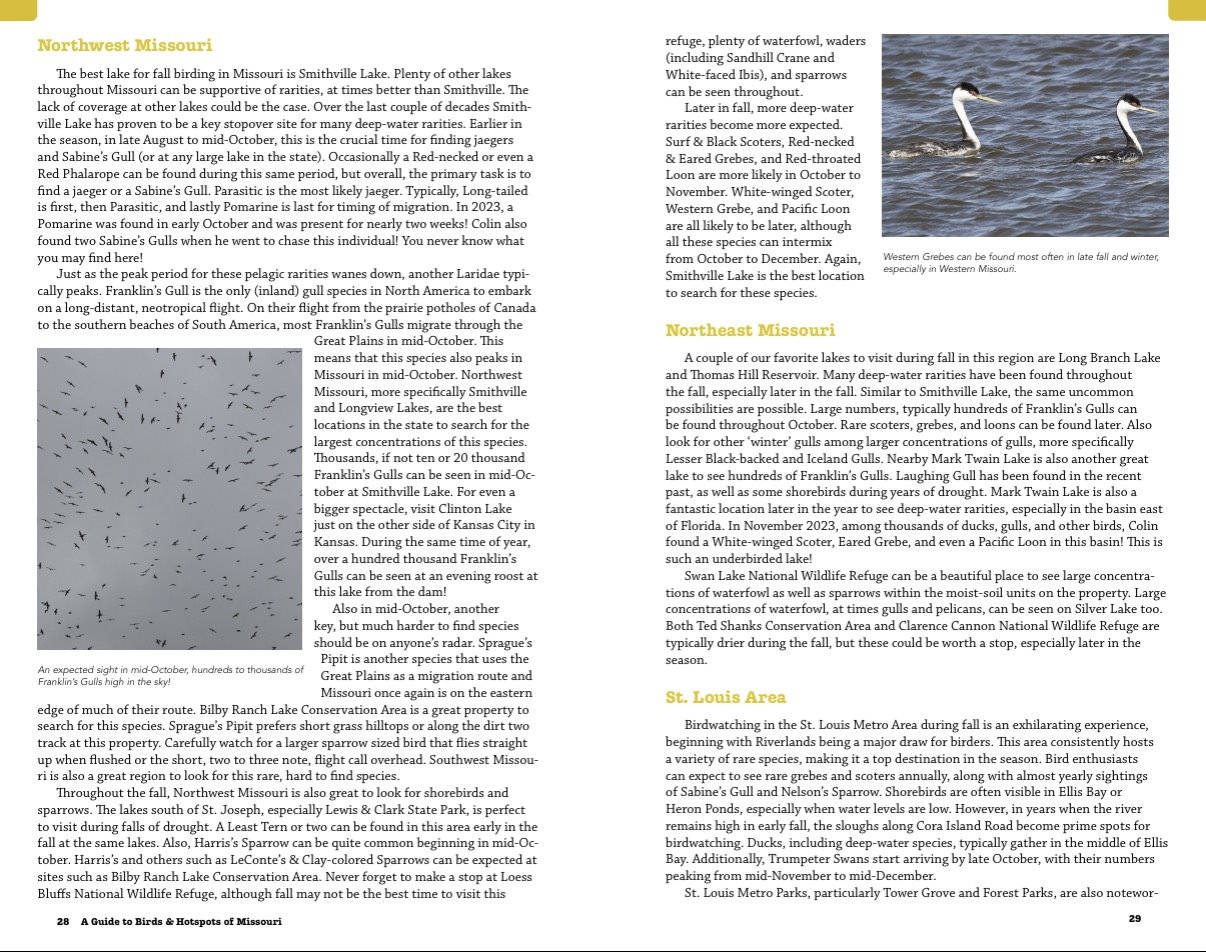
Big lakes are where the deep-water rarities appear. In mid-October, more than a hundred thousand Franklin's Gulls have been counted at Smithville Lake's evening roost, and jaegers pass through from late August.

Look for: Franklin's and Sabine's Gulls, jaegers, loons, grebes, scoters

Places: Smithville Lake, Mark Twain Lake, Long Branch Lake, Thomas Hill Reservoir

Shrubland, edges, and city parks

Thickets and forest edges hold many of the summer's singers. On a mid-May morning, city parks can hold over fifteen warbler species, and you can bird them before work.

Look for: Bell's Vireo, Yellow-breasted Chat, Blue-winged Warbler, Indigo Bunting, migrant warblers

Places: Tower Grove and Forest Parks, Grindstone Nature Area, Three Creeks CA
Where to go

The book divides the state into regions and maps the key hotspots in each one, with directions, parking, trails, and the best time to visit. Here are a few of the sites it covers.

Northwest Missouri

Prairie, loess hills, and the Missouri River floodplain. Smithville Lake is the best lake in the state for fall rarities.

  • Dunn Ranch
  • Bilby Ranch Lake CA
  • Loess Bluffs NWR
  • Smithville Lake

Northeast Missouri

Big, under-birded lakes and river refuges. Mark Twain Lake has produced White-winged Scoter, Eared Grebe, and Pacific Loon in a single November visit.

  • Mark Twain Lake
  • Long Branch Lake
  • Swan Lake NWR
  • Ted Shanks CA

St. Louis area

The confluence of the two great rivers, plus city parks that act as migrant traps every May.

  • Riverlands MBS
  • BK Leach CA and Winfield Dam
  • Tower Grove and Forest Parks
  • Weldon Spring CA

Central Missouri

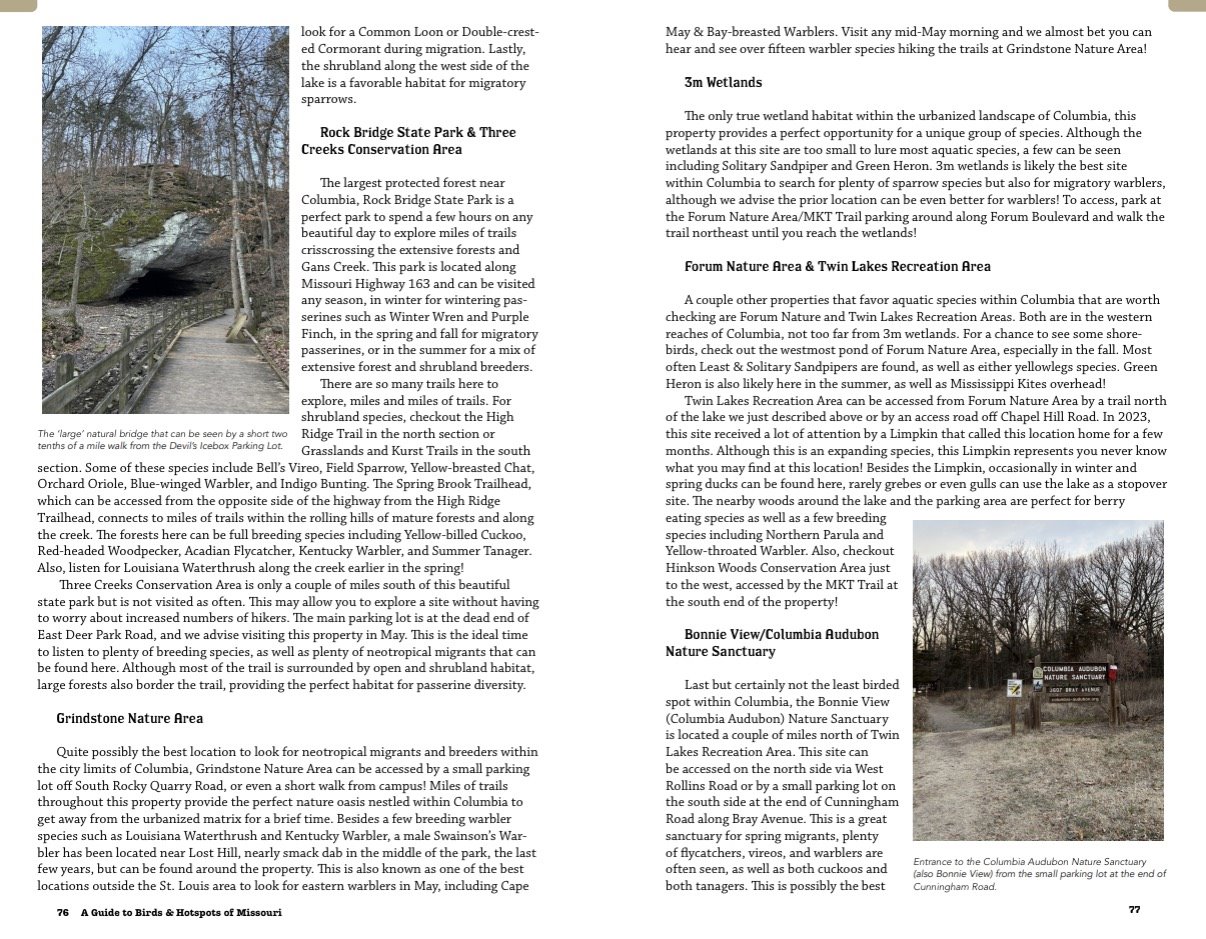
Columbia and the surrounding area have forest, wetland, and river bottoms within a short drive of each other.

  • Rock Bridge State Park
  • Grindstone Nature Area
  • Eagle Bluffs CA
  • Bonnie View Nature Sanctuary

West and Southwest

Prairie remnants and marshes along the Osage Plains, where western species reach the edge of their range.

  • Hi Lonesome Prairie CA
  • Schell-Osage CA
  • Shawnee Trail CA

The Ozarks and Southeast

Forested hills and clear streams give way to the lowland swamps and rice fields of the far southeast.

  • Mark Twain National Forest
  • Sugar Camp Scenic Byway
  • Duck Creek CA

When to go

Timing matters as much as place. Some species pass through in a window of only a week or two, and the book tells you which weeks they are.

Spring

March to May

Prairie-chickens display at Dunn Ranch from late March into early May. Warblers peak from mid-April to mid-May, and Hudsonian Godwits and Whimbrels pass through the mudflats in a few short weeks.

Summer

June to August

Cerulean and Hooded Warblers nest in the southern forests, and Dickcissels and Bobolinks sing on the prairies. Least Terns nest on sandbars above Winfield Dam, and shorebirds start returning in mid-July.

Fall

August to November

Jaegers and Sabine's Gulls turn up from late August, and Franklin's Gulls peak by the tens of thousands in mid-October. Sprague's Pipit hides on short-grass hilltops, and Trumpeter Swans begin arriving in late October.

Winter

December to February

Swans and eagles gather at Riverlands, and gulls and scoters use the open water below Winfield Dam. Short-eared Owls hunt the fields at BK Leach at dusk, and a late hummingbird at a feeder may be a Rufous.

Book spread covering fall birding in Northwest Missouri, Northeast Missouri, and the St. Louis area, with photos of a Franklin's Gull flock and two Western Grebes.
Fall in Northwest Missouri, Northeast Missouri, and the St. Louis area.

Every region, every season

The book's first chapter goes region by region and season by season, so you can choose the right lake, refuge, or forest for the weekend ahead. In mid-October, for example, it sends you to Smithville Lake. Tens of thousands of Franklin's Gulls gather there, and over a hundred thousand have been counted at the evening roost.

Every species tells you where and when

Every one of the 325 species accounts opens with the same three facts: hotspots, best time of year, and similar species. Here are a few, exactly as they appear in the book.

Sample entries from the species accounts. Each full account adds photographs, a description, the song, and a county range map.
SpeciesHotspotsBest time of year
Trumpeter SwanRiverlands MBS, Swan Lake & Loess Bluffs NWRsNovember to March
Wood DuckSwan Lake NWR, Eagle Bluffs & Duck Creek CAsApril to September
King RailBK Leach CA, Loess Bluffs NWR, and rice fields in SE MOMay to July
Upland SandpiperHi Lonesome Prairie CA and Dunn Ranch (for breeding)May & mid-July to late August
WhimbrelRiverlands MBS and Loess Bluffs NWRMay 15th to May 25th
Hudsonian GodwitLoess Bluffs NWR, Schell-Osage CA, and Riverlands MBSMid-April to mid-May
Hooded WarblerMark Twain NF, Weldon Spring CA (Lewis & Clark Trail), and Sugar Camp NF Scenic BywayMid-April to July
Cape May WarblerTower Grove & Forest Parks, and Grindstone NAMid-May & September
Cerulean WarblerMark Twain NF, Weldon Spring CA (Lost Valley Trail), and Sugar Camp NF Scenic BywayLate April to early July
Book spread describing Columbia-area hotspots: Rock Bridge State Park, Three Creeks CA, Grindstone Nature Area, 3M Wetlands, Forum Nature Area, and the Bonnie View Nature Sanctuary.
Columbia-area hotspots.

Written by birders who have been there

The site descriptions read like advice from a friend who has already walked the trail: which parking lot to use, which loop to take, and what to listen for along the creek. That's because the authors have walked those trails themselves, many times, in every season.

Meet the authors

Plan your next trip with the book

Includes more than 75 hotspots, 355 species, and a season-by-season breakdown for every region of the state.

Secure checkout through Square.

Order the book